Why the fastest route to process optimisation in less digitalised plants starts with measurement, not modelling
Predictive optimisation assumes a data foundation
Predictive process optimisation rests on an assumption that is rarely stated: that the plant already generates the data a model can learn from.
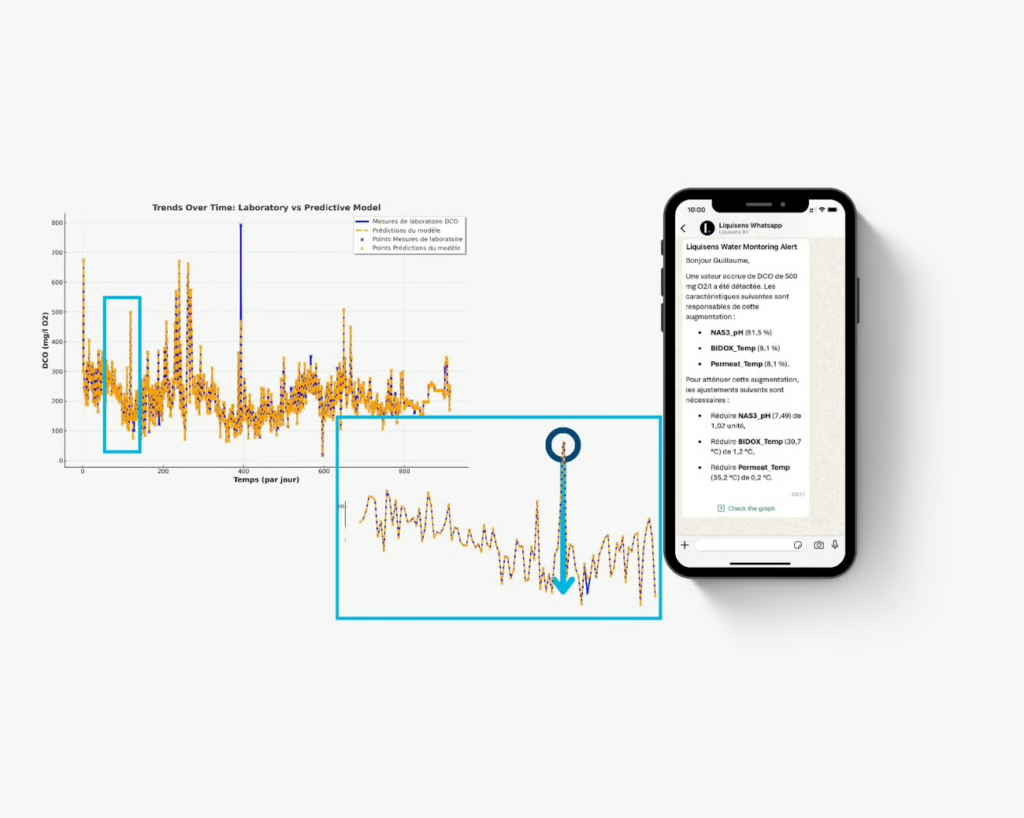
In many industrial wastewater plants in Western Europe and North America, that assumption holds. SCADA systems run, historians store years of process data, and laboratory records can be aligned with sensor signals. The work is to engineer that data into foresight, and earlier articles in this series described that work in detail.
In many other plants, the picture is different. There is a PLC. There may be an HMI panel showing a handful of values. There is no historian. Yet the operating problems are the same: chemical consumption nobody can explain, biology that fails without warning, dosing that follows habit rather than load.
The usual conclusion is that predictive tools are for mature plants and everyone else has to wait.
We think that conclusion is wrong. Plants with the least data infrastructure are often where the first gains come fastest, provided the sequence is right.
What the data looks like on the ground
Consider two large slaughterhouses with substantial wastewater flows.
The first, in north-western Europe, runs a SCADA system with around 150 real-time input parameters on its wastewater treatment. A predictive model has something to work with from day one.
The second treats around 1,500 cubic metres of wastewater per day. It has a PLC and a local HMI. Once a week, someone reads the values on the panel and writes them down. Purchasing records show how much ferric chloride the plant buys, and the quantity is significant. Nobody can say how much is dosed per hour, when, or in response to what.
The operating consequences follow directly. When disinfection runs overnight in production, the chemicals reach the biological stage and damage it, but nothing records when that happened or how large the shock was. When a high blood load enters the system, the current instrumentation does not see it. The effect shows up later, downstream, as a problem without a cause.
The operators are not careless. They are working without feedback.
A predictive model cannot be trained on weekly handwritten readings. That much is obvious. What is less obvious is what this plant should do instead.
Why the gap is also the opportunity
A well-instrumented plant has usually captured the obvious gains already. What remains sits in the safety margins operators carry because feedback is delayed. Closing those margins requires prediction.
A plant without continuous measurement has not reached that point. Its inefficiencies are larger and more basic. Coagulant dosing that is not linked to load. Biological upsets traced back days later, if at all. Cleaning and disinfection cycles whose effect on the treatment plant nobody can see.
None of these needs a sophisticated model to become visible. They need the right measurements in the right places, logged continuously and shown to the people who run the plant. Once that exists, a substantial part of the improvement follows from visibility alone.
That changes the investment logic. The standard advice to a plant in this position is to install a full SCADA system and revisit optimisation in two years. That route is expensive and slow, and the plant pays for the same inefficiencies in the meantime.
Insights first: measure what matters, then model it
Liquisens has two business lines on one data foundation. Liquisens Predict builds plant-specific predictive models on existing process data. Liquisens Insights provides real-time monitoring through the MyLiquisens platform: live visualisation, rule-based alarms, centralised monitoring across sites, and automated reporting.
For a plant without a data foundation, Insights is the logical first step. The scope is deliberately narrow.
The first step is to install the few sensors that matter most. In the slaughterhouse example, conductivity measurement at the right points would show when disinfection chemicals enter the system and how large the shock is. One signal turns an unexplained biological failure into a traceable event.
The second is to use what the PLC already knows. Most PLCs hold more than anyone records: flows, pump states, dosing pump operation, levels. Connecting them to the cloud replaces the weekly clipboard with a continuous record, without adding sensors.
The third is to start with simple models. Correlating dosing with load. Flagging deviations. Establishing a baseline for chemical consumption per cubic metre treated. None of this needs advanced machine learning. It needs data that did not exist before.
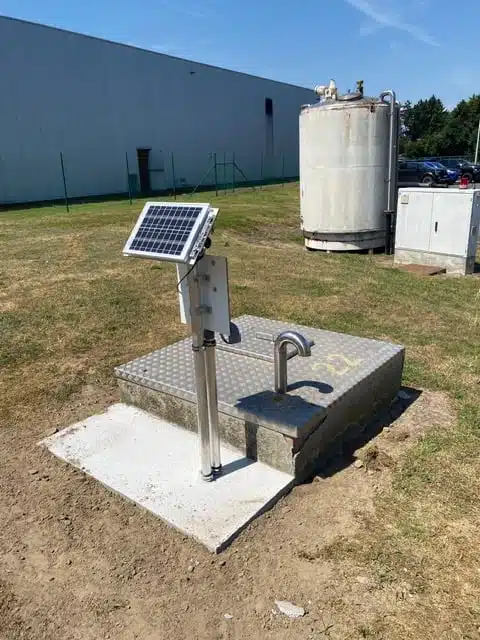
Deployment does not have to mean infrastructure projects. For a dairy processor that had to log groundwater levels and extraction rates hourly at remote wells, Liquisens and Crodeon installed solar-powered monitoring units that transmit wirelessly, with no connection to existing SCADA or IT systems. The same infrastructure-light logic applies inside a treatment plant that has no SCADA to connect to.
Which step a plant is ready for
Plants often ask about prediction first. Whether they are ready depends less on ambition than on data, and three questions settle it quickly.
Are the process signals that matter logged continuously, with timestamps, and kept beyond what the HMI displays? If they exist only on a panel or a clipboard, there is nothing to train a model on yet.
Can laboratory results be aligned with those signals? A predictive model learns the relationship between what the sensors see and what the laboratory measures. Without a consistent record of both, there is no relationship to learn.
Is dosing recorded as it happens, or only as a monthly purchase volume? Optimisation needs to know what was done, not only what was bought.
A plant that can answer yes to all three is ready for Predict, and the work described earlier in this series applies directly. A plant that answers no to most of them is not behind. It is at the start of the sequence. For that plant, the recommendation is Insights first, with Predict as the defined next step rather than an open-ended promise.
From Insights to Predict
Starting with Insights is not a detour from prediction. It is how a less digitalised plant gets there.
Every month that monitoring runs, the plant builds the dataset Predict needs: continuous, timestamped, and aligned with what actually happened in operation. Events that used to be invisible are recorded and labelled as they occur, including the overnight disinfection and the unexplained load. That is the operator knowledge earlier articles in this series described as essential to a reliable model. When the plant is ready for prediction, the model starts from data collected for that purpose, not from a historian configured for something else.
The value does not wait for that point. Visibility creates value first, through dosing linked to load and upsets traced to their cause. Prediction then narrows the margins that remain.
This also changes who can benefit. Predictive optimisation is not reserved for plants that already have a SCADA system and a historian. It is the end of a sequence that any plant can start, at whatever level of instrumentation it has today.
The useful question for a plant is not whether it is ready for predictive optimisation. It is which step it is ready for now.