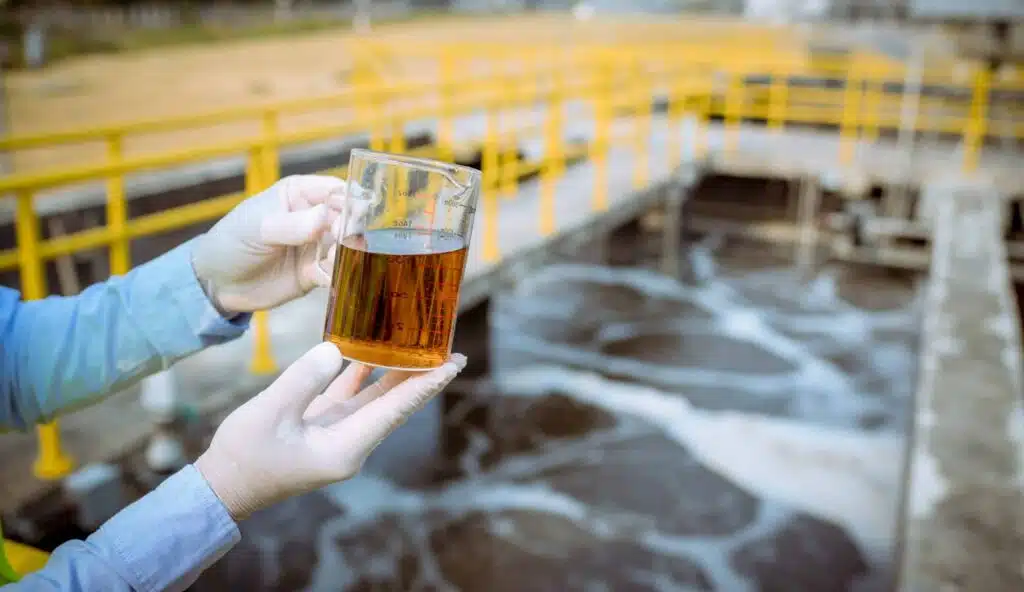
Liquisens turns existing water data into real-time intelligence.
By applying Al on top of current monitoring, we provide clear, actionable guidance to industrial and municipal operators across process water and wastewater. This helps detect events early, ensure compliance, and avoid costly shutdowns — turning water management from reactive to predictive.
Our approach
We combine real-time monitoring, predictive analytics, and continuous optimization to help industries manage water smarter, safer, and more sustainably.
1. Smart Monitoring
We connect to existing sensors or deploy our loT tools to monitor water quality and key parameters in real time
2. Predictive insights
Our Al-driven models transform data into early warnings and actionable insights, helping you prevent issues before they occur.
3. Continuous Optimization
We deliver clear reports, detect deviations instantly, and guide you toward smarter, more sustainable water management.
Smarter water solutions for every challenge
Liquisens delivers predictive, data-driven solutions that transform water quality management across industries – from cooling towers to hygiene monitoring.
Cooling Tower Management
Real-time COD & BOD Prediction
Harmful Algal Bloom Monotoring
Food Hygiene Monitoring for Water Systems
Legionella Monitoring & Prevention
Case Studies
Learn how AGFA leverages Liquisens Predict for Proactive Legionella Risk Management
Predicting Legionella Risk in Industrial Wastewater Treatment
Our project in cooperation with KWR and CEW aimed to move beyond periodic sampling and establish a foundation for predictive legionella risk monitoring.
Liquisens is a Belgian water technology company that provides predictive water quality intelligence for industrial and municipal operators.
Founded in 2019 and based in Antwerp, Liquisens applies artificial intelligence to the data plants already collect from their SCADA systems, sensors, and laboratory records, turning it into real-time and predictive insight.
This helps operators detect water quality events early, stay compliant with discharge and safety regulations, and avoid costly process disruptions, without installing new monitoring hardware.
Liquisens delivers this through two products: Liquisens Predict for predictive analytics and Liquisens Insight for real-time monitoring and reporting.
How does Liquisens predict water quality?
Liquisens builds a site-specific predictive model for each plant, trained on that plant’s own SCADA data, sensor readings, and historical laboratory results.
Rather than applying a generic algorithm, the model combines machine learning with process and domain knowledge so it reflects how that specific plant behaves. It learns how conditions such as flow, temperature, aeration, and chemical dosing drive measured water quality parameters, then predicts those parameters in real time, ahead of laboratory confirmation.
When values deviate from expected behavior, Liquisens flags the anomaly, identifies the likely process cause, and recommends a corrective action.
Does Liquisens require installing new sensors or hardware?
No. Liquisens Predict runs on the data a plant already generates, using existing SCADA systems, process sensors, and laboratory records, so there is no new instrumentation to install and no interruption to operations.
This is the core difference from adding a UV-Vis analyzer or another physical probe, which requires capital investment, recalibration, and ongoing maintenance. Where a site lacks the data it needs, for example a remote location without existing monitoring, Liquisens can deploy lightweight IoT sensors through its Liquisens Insight platform. For most predictive use cases, however, the existing data infrastructure is sufficient.
Which water quality parameters and problems can Liquisens address?
Liquisens covers organic load parameters such as COD (chemical oxygen demand) and BOD (biochemical oxygen demand), nutrient parameters including nitrogen and phosphorus, suspended solids, and microbiological risks such as Legionella.
In practice this supports several use cases: real-time COD and BOD prediction for wastewater treatment, Legionella risk monitoring in cooling towers and biological treatment systems, harmful algal bloom (blue-green algae) monitoring, and hygiene monitoring in food and beverage production.
The same core approach applies across chemicals, food and beverage, pharmaceuticals, pulp and paper, steel, and municipal water utilities.
How accurate are Liquisens's predictions, and how are they validated?
Because every plant is different, Liquisens trains and validates a dedicated model for each site rather than applying a generic algorithm.
Accuracy is measured against the plant’s own laboratory results on data the model has not seen during training, and predictions are only used operationally once this validation confirms they are reliable. Accuracy depends on the quality, frequency, and history of the available data.
In favorable conditions, prediction error for parameters such as COD can approach the analytical uncertainty of the laboratory methods themselves, meaning the model tracks lab-grade values in real time.
How is a Liquisens project delivered, and how long does it take to see results?
A Liquisens engagement typically starts with a proof of concept. The plant shares historical SCADA and laboratory data, and Liquisens assesses data readiness, builds an initial predictive model, and quantifies the potential value, often within a few weeks of receiving usable data.
After validation, the model is deployed for real-time use through the MyLiquisens platform or integrated into the customer’s own systems via API.
Liquisens can work directly with an asset owner’s internal team, or alongside an existing water treatment operator as an added predictive layer, without disrupting current service contracts.